 All Posts
Today we announced our initial funding round. Special thanks to Fly Ventures, who believed in us from Day -1 and led the round, and to co-lead Toyota Ventures and their amazing support team! We are excited to be on this path together. Many thanks also to Logos Fund and Sparked Ventures, who participated in the round and provided help and sage advice along the way.
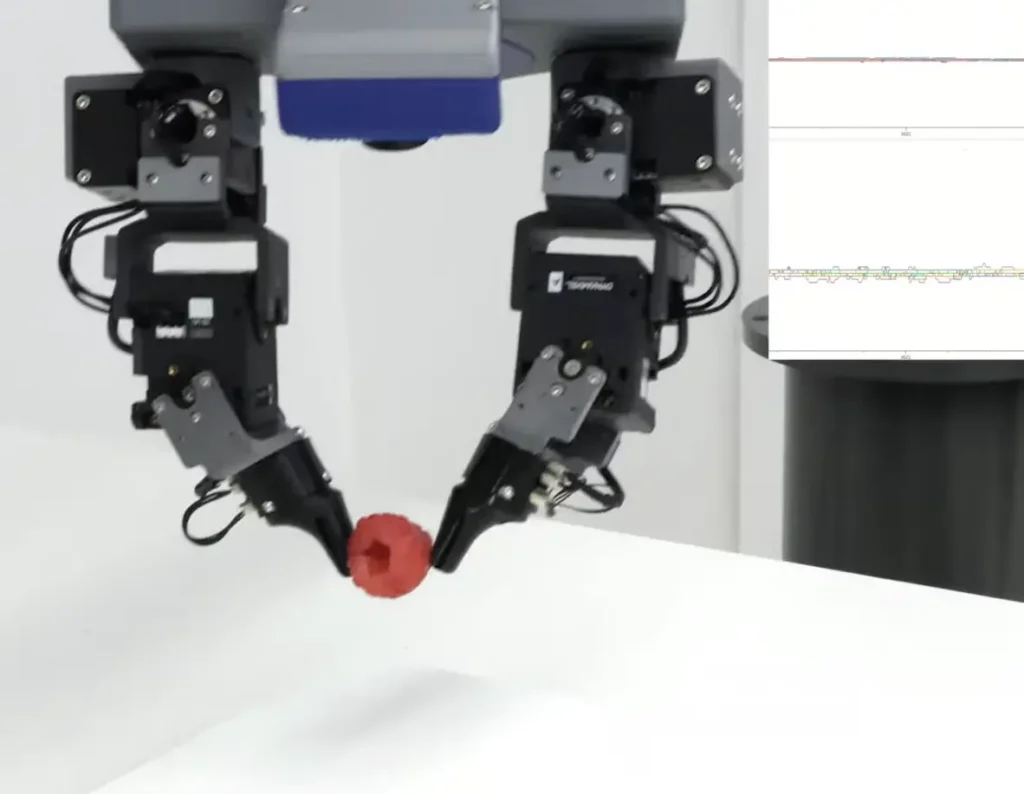
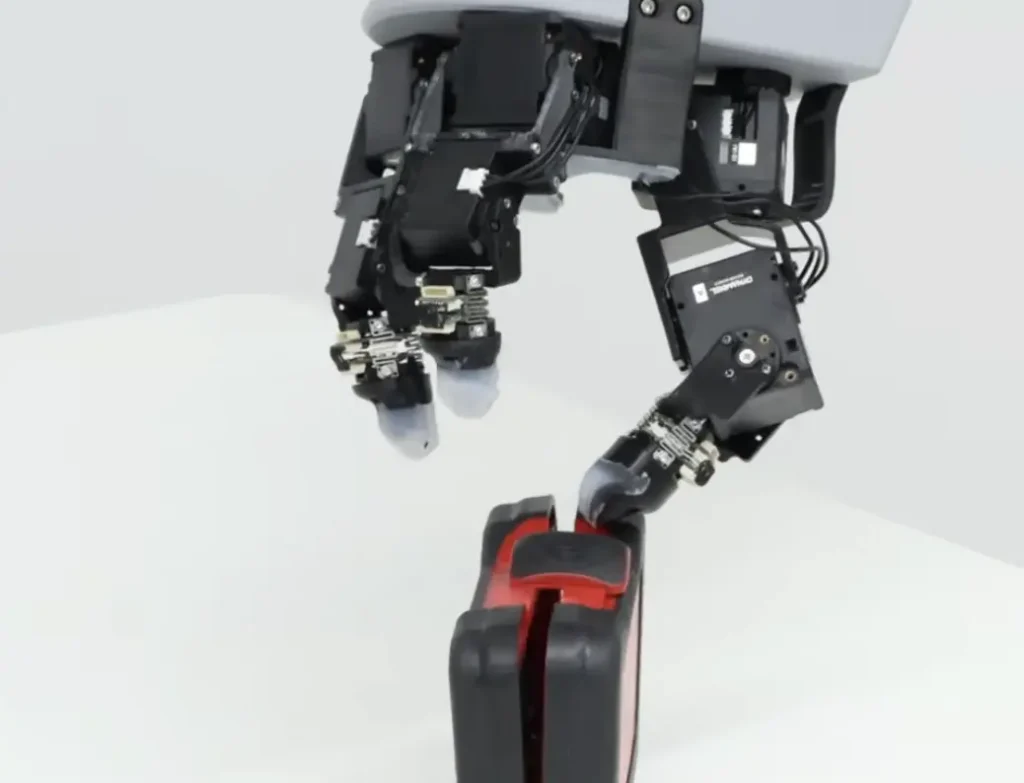
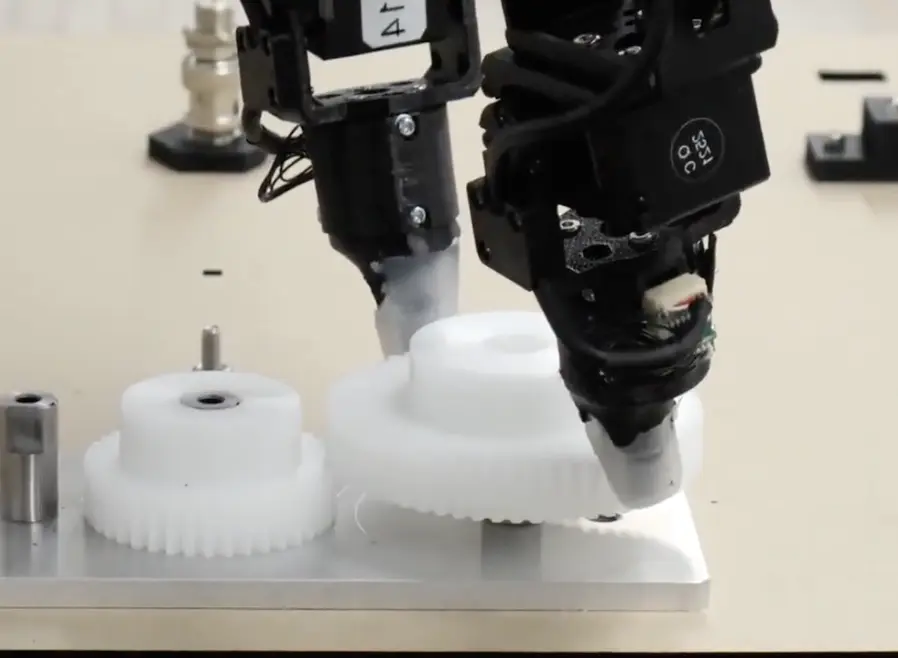
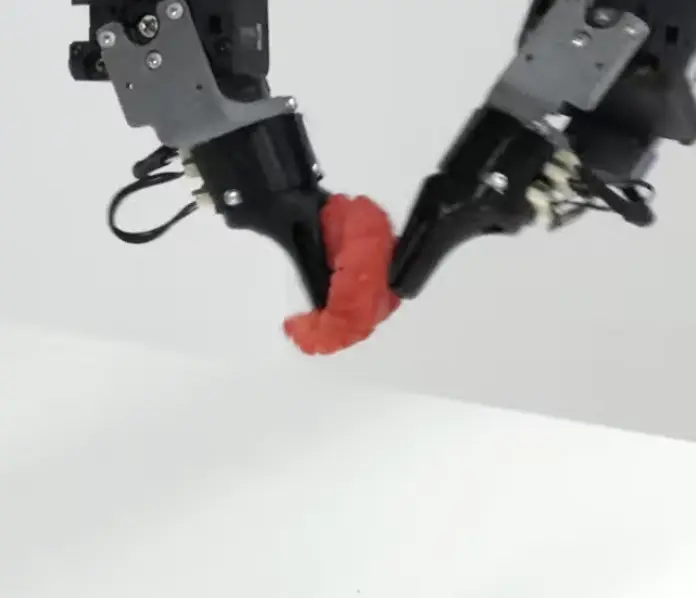
This is a good time to review our mission statement! We think there is a layer, below VLAs but above low-level controllers, that is critical for manipulation. We refer to it as the fine motor skill layer – the “muscle memory” that you use for anything dexterous, without having to pause and think about it at a conscious level. The tricky thing about this layer is that it sits at the intersection of sensing (touch/proprioception/vision), hand hardware (articulation, actuation), and motor learning. We are building the fine motor skill layer for robot hands, and using it to train policies for skilled manipulation. This includes things like assembly, threading, part sequencing, wiring and connector mating, gasket seating, snap fitting, gear meshing, things you can not do without fine motor skills but that are all needed to scale up manufacturing, equipment installation, maintenance, etc.
Full press release below!
Tangent Robotics Raises 4.5M in Pre-seed Funding to Advance Fine Motor Skills for Robot Dexterity
Fly Ventures and Toyota Ventures Lead Round on Columbia University Spinoff Fusing Robot Hands, Touch Sensing and Motor Learning
New York, September 30th 2026 – In humans, fine motor skills can take two decades to fully develop. Tangent Robotics, which today announced its pre-seed funding round, aims to speed up the timeline for robots. The company will use the funds to develop skilled robotic manipulation capabilities at the intersection of hand hardware, touch sensing, and motor learning, and deploy them in demanding manufacturing environments.
“Fine motor skills are hard to learn, and represent a layer that is currently missing in robotics but omnipresent in the real world,” says Pedro Piacenza, Tangent’s co-founder. “They unlock the ability to perform delicate, intricate manipulation. Tasks like assembly, threading, connector mating, gasket seating, snap fitting, gear meshing – these are critical steps for most of what we want our economy to build locally, fast and at scale, and they all require a level of fine motor skill that today’s robots don’t have.”
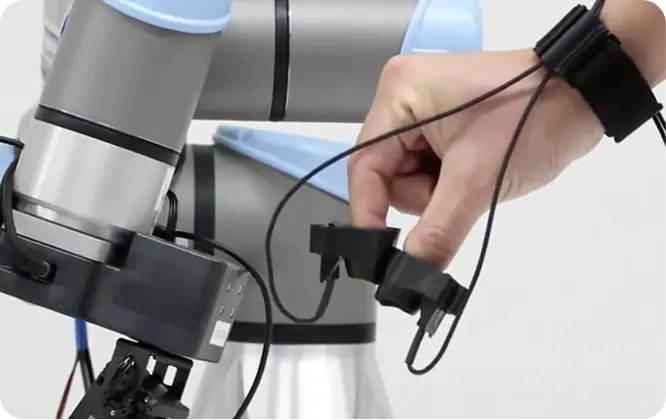
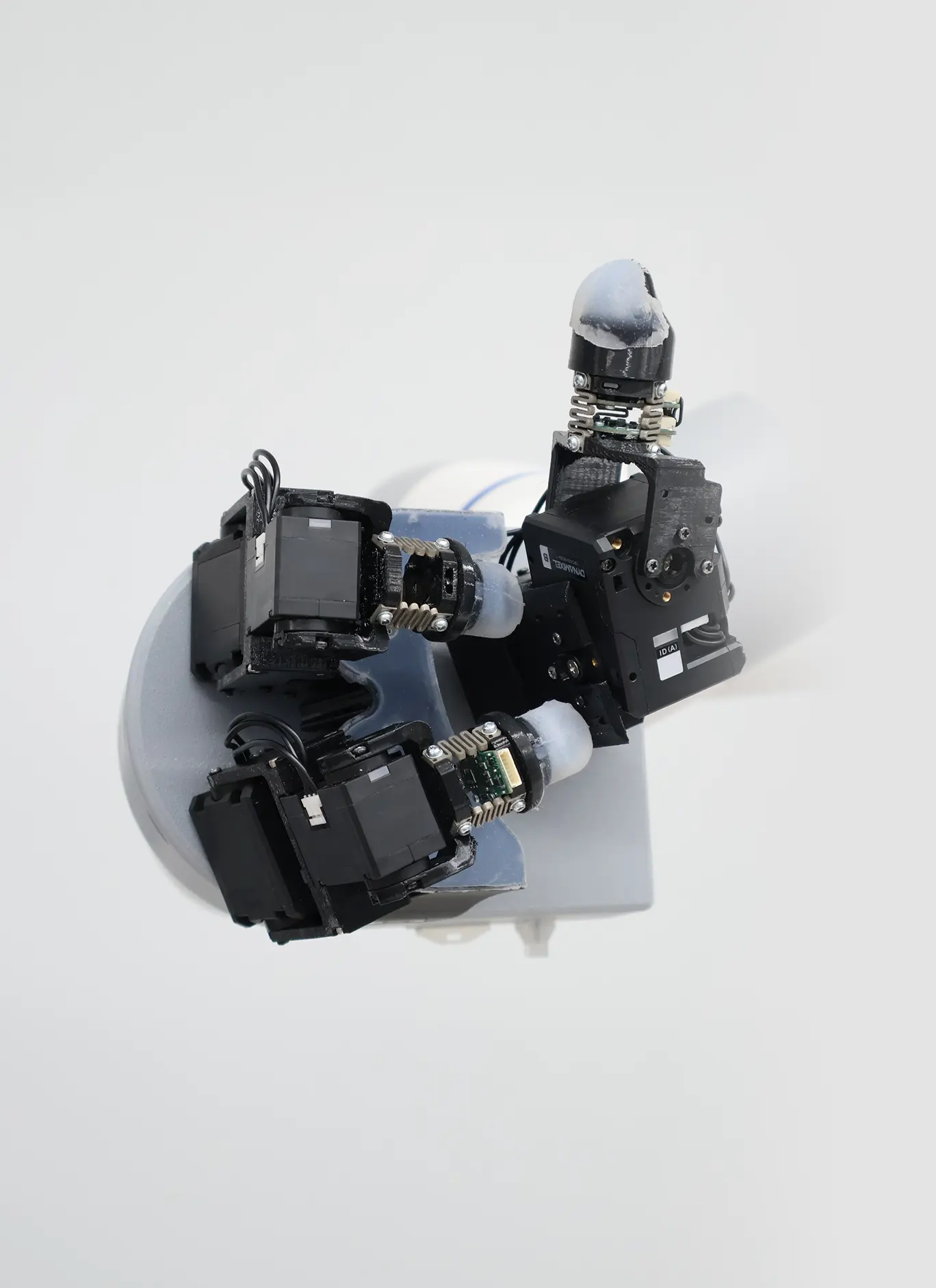
To enable these missing capabilities, Tangent Robotics has developed precise light-based touch sensors for robot fingers, robot hands that can perfectly track human fingertips, and new data collection and machine learning methods, all of which come together in the fine motor skill layer that enables autonomous dexterity. While other components such as Vision-Language-Action models, can be capable of abstract, semantic intelligence, a Tangent Robotics hand is designed to take over for the delicate, high-value last mile of skilled manipulation, such as unstructured part sequencing and processing, exacting assemblies and manufacturing, installation and maintenance including disassembly, inspection, reassembly and wiring of electrical or mechanical equipment, and many others.
While the human hand is the pinnacle of motor skill, Tangent Robotics is not attempting to create engineered clones of it. “Trying to copy the human hand is a mistake akin to building flying machines with flapping wings“, says Matei Ciocarlie, Tangent co-founder and Columbia Engineering robotics professor. “What we can do is build robot hands that are capable of dexterity even with non-human-like components or articulation.” In the process, the company aims to reduce the practice time it takes to achieve such skills to days and then hours.
Spun out of Columbia Engineering’s Robotic Manipulation and Mobility Lab, Tangent Robotics brings unique expertise at the intersection of sensing, robot hand design and motor learning. While at Columbia Engineering, the founding team, which includes Piacenza, Ciocarlie, and unconventional electronics expert Ioannis Kymissis, introduced the DISCO robot finger, capable of sensing touch via light, designed hands for NASA’s Assistive Free Flyer robots on board the International Space Station, and built the first robot hand capable of in-hand dexterity even in the dark, named one of Time Magazine’s Best Inventions of 2023. Before Columbia, Ciocarlie co-led the manipulation team at Willow Garage, the robotics hub and incubator where the Robot Operating System, or ROS, was first developed.
“Grippers and suction cups are effective in less delicate applications (pick & pack, sorting, etc.) but incompatible with a lot of economic activity” says Matt Wichrowski, Partner at Fly Ventures. “The fine motor control needed for more complex manipulation is an incredibly difficult technical challenge, but one that the Tangent team has spent their entire career focused on.”
David Sokolic, Partner at Toyota Ventures adds: “Tangent’s approach flips the script on traditional robotic manipulation. By engineering compliance primarily into the sensor stack rather than relying solely on the mechanics, they aim to deliver the high-fidelity touch needed for physical AI. Toyota Ventures is thrilled to support their pragmatic, hardware-first journey as they attempt to unlock a massive bottleneck in industrial assembly and help manufacturers automate their most stubborn tasks.”
Additional investors in the round included Logos Fund and Sparked Ventures.
About Tangent Robotics
Tangent Robotics is an NYC based company spun off from Columbia University to develop the fine motor skill layer for robotic manipulation, aiming to automate complex, high-precision tasks, starting on the factory floor. For more information, visit www.tangentrobotics.ai.
Media Contact